SCEEUS & EPIK Report No. 1


Executive Summary
- Ukraine’s successful deep strikes in 2026 are threatening Russia’s logistical rear and creating risks for the Russian economy. Moscow has responded to these attacks with a further escalation against the Ukrainian population and civilian infrastructure, as well as an intensification of its hybrid war against the West.
- Ukraine has insufficient means to defend against ballistic missiles. Cheaper long-range cruise missiles being developed by Russia are likely to become an even greater threat because of their improved accuracy. Ukraine will face a growing need for expensive interceptors against a far greater volume of missiles.
- An escalation to the nuclear level is conceivable but would rupture relations with so far supportive or neutral countries such as China or India. A massive conventional military attack on a NATO country is currently much discussed in European defence circles and the media, but this would draw Russia into a two-front war that could hinder its ambition to subjugate Ukraine and is therefore unlikely to be attempted by the Kremlin.
- A more likely route for Moscow would be to target the sites of European support below the threshold of war. Incidents of sabotage, GPS interference and malicious drones aimed at ports, airports and rail links, as well as the factories where Europe is assisting Ukraine are likely to increase.
- Russia’s relatively expensive ballistic missiles and expected future cheap cruise missiles require new responses. These will include joint EU-Ukraine production of low-cost interceptors, sensors and electronic-warfare systems able to absorb mass attacks without exhausting high-end stocks.
- The logistics that sustain Ukraine must be built to withstand disruption. After this summer’s drone attack on Leipzig Airport, designated hubs should be given the authority and equipment to detect threats and protect cargo, and alternative flightpaths to allow them to reroute cargo and resume operations within hours. Ensuring that European materiel support for Ukraine is not disrupted will be a crucial task.
Introduction
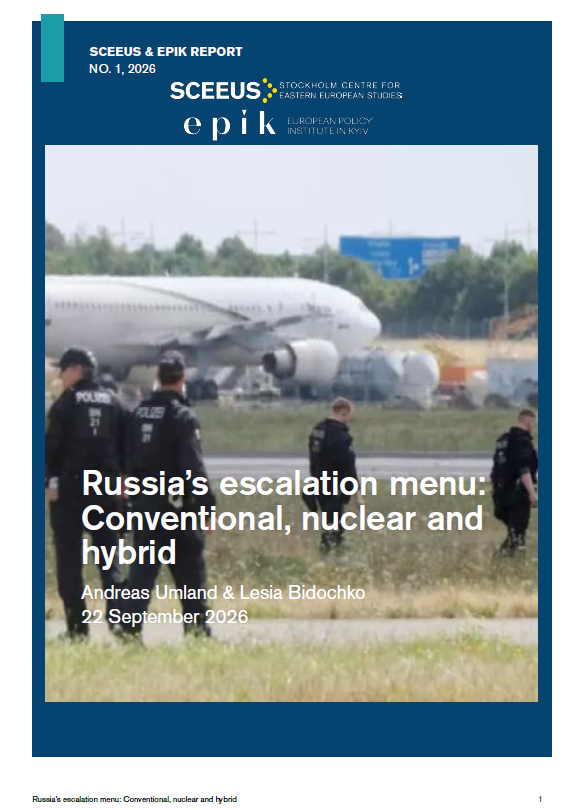
On 1 September 2026, the German government concluded that Russian state agencies had been behind a drone attack on Leipzig/Halle Airport. Four weeks earlier, airport workers had found an explosives-laden drone near a Ukrainian Antonov cargo aircraft. Flights were suspended at the site, which is both a major civilian freight hub and a base for NATO strategic airlift. Berlin responded by closing Russia’s consulate in Bonn and the so-called Russian House in Berlin, among other things.
The incident in Leipzig constituted an attempted strike on the physical link through which Europe sustains Ukraine. Its significance lies as much in the dilemma it created as in the immediate damage it could have caused. How should European governments respond when a hostile act is serious enough to endanger military logistics but calibrated to remain below the threshold that would trigger a unified military response?
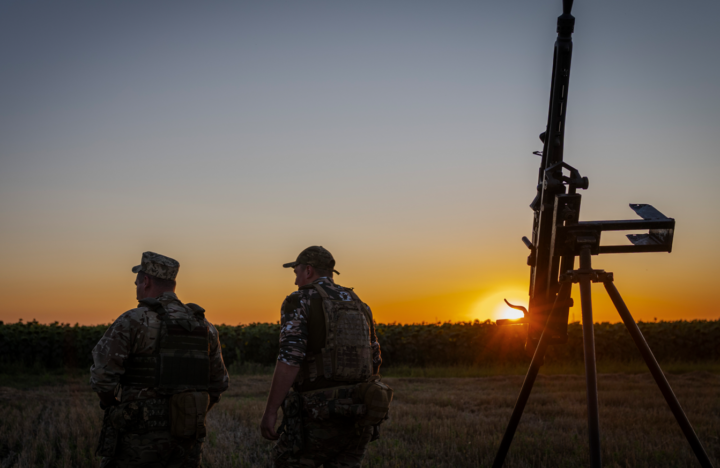
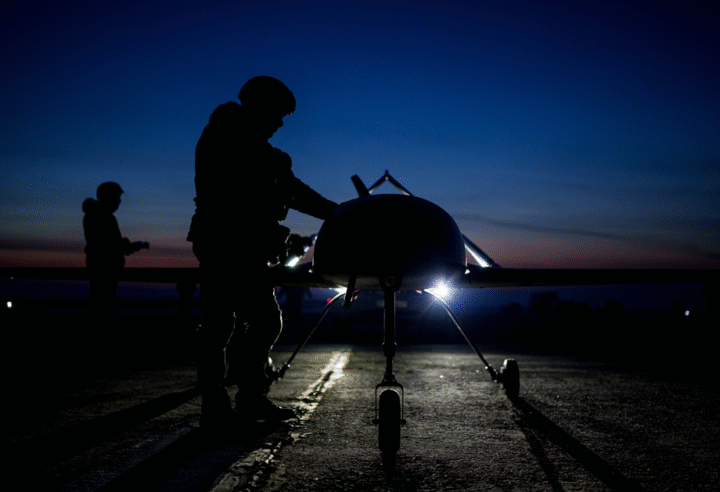
The Leipzig episode belongs to a larger story of the transformation of the Russo-Ukrainian War since June 2026. Ukraine has been inflicting a campaign of drone and missile strikes deep inside Russia that aims to disrupt or end the operation of oil refineries, shadow fleet tankers, arms factories, storage facilities and logistics centres.
These long-range strikes alone will not compel a change in Russian policy. Nonetheless, they have changed the war’s character for the Russian population from a distant military engagement to a battle with meaningful domestic repercussions. The impact of Ukraine’s deep strikes is designed to move towards an end to the war, or at least a temporary ceasefire.
However, the immediate reaction from Moscow has been to retaliate with a surge of terror attacks against Ukrainian civilians and, as Leipzig has shown, by intensifying hybrid operations against various European entities that support Ukraine. Can Russia make retaliation pay? This survey identifies the options Moscow might be able to sustain, those likely to backfire and the EU measures that can reduce their pay-off.
Between moderation and escalation
Ukraine’s ever deeper and more precise strikes on the Russian hinterland have shaken the foundations of the informal contract between Russian society and Putin’s regime. The unspoken agreement has been that the latter can do in politics whatever it wants as long as this does not seriously harm Russians’ standard of living or interrupt everyday life. However, among other things, Ukraine’s long-range drone attacks are triggering fuel shortages and reducing government revenues that keep salaries, prices and pensions stable. Moreover, if Ukraine can maintain or increase this momentum, and do further damage to Russia’s energy and logistics infrastructure, there will be cascading effects throughout the Russian economy, for instance, on agriculture, banking and civilian aviation.
The Kremlin has thus far refused Kyiv’s proposals for a general ceasefire or a mutual moratorium on deep strikes. One reason for Moscow’s intransigence is that Russian pro-government media, military bloggers, ultra-nationalist activists and semi-autonomous civil society demand retaliation rather than moderation from the Kremlin. This is the only response they can imagine to Ukraine’s international humiliation and socio-economic destabilisation of Russia.
The main determinant of Moscow’s immovability, however, is that a compromise by Putin would go against the ideological foundations of his own thinking, public image and political rule. The Kremlin needs revenge for propaganda purposes, to demonstrate its continued military potency and resolve to Russia’s population and foreign partners. Putin and his entourage still aim to win the war through an escalation of the terror campaign. This is intended to deter Kyiv from further deep strikes and the West from continued support for Ukraine, leading to Ukraine’s capitulation. In Russian strategic thought, this approach is known as “escalate to de-escalate”.
What choices does the Kremlin have? Which of Russia’s responses to Ukraine’s deep strikes might develop further and what new techniques might it bring? Finally, what are the price tags, likelihood and repercussions of each of the various options available to Moscow?
Conventional escalation
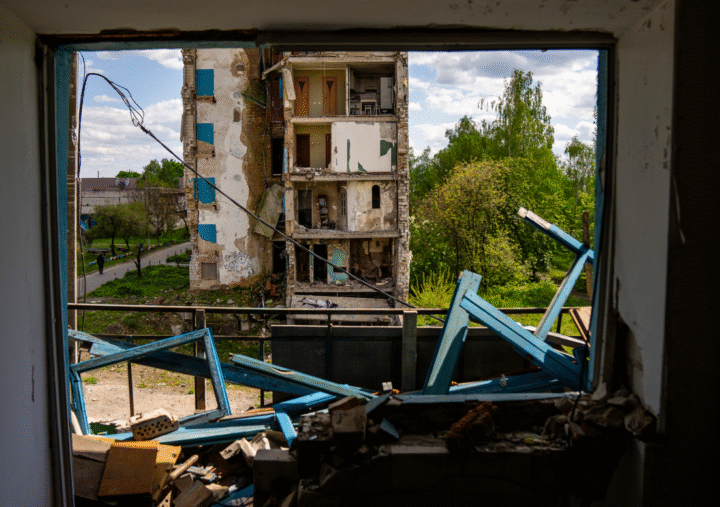
The current intensified response from the Kremlin has been conventional escalation against Ukraine along previous lines. This is manifest above all in intensification of the already ruthless terror bombardment campaigns against Ukrainian civilian infrastructure, from hospitals and libraries to warehouses and power stations. Among other cities, Kyiv has recently been experiencing larger and more sustained missile and drone attacks on an almost daily basis. The 2026 increase in strikes on Ukraine’s capital is partly the result of a reassignment of Russian military resources.
Russia has recently concentrated a larger proportion of its long-range attacks on Kyiv, including against the capital’s political and administrative centre. This does not necessarily mean that Moscow has acquired fundamentally more strike capacity. For now, it is partly a reprioritisation of finite missile, drone and launch capacity. The weapons directed at Kyiv are, at least in part, weapons not used against targets elsewhere in Ukraine. The shift still matters as it makes the capital a principal arena for coercion, disruption and political signalling.
Worryingly, however, Russia’s new focus on Kyiv is a result not only of an “either-or shift”, but also of growing production capacity. According to Ukraine’s Defence Intelligence (HUR), Russia can now produce more than 200 cruise and ballistic missiles a month. Unverified reporting also suggests that Moscow could be aiming to produce around 10,000 low-cost Dan-T cruise missiles in 2027. Russia is trying to build a long-range strike force that is cheaper and easier to use at scale. These figures do not prove that Russia already has surplus strike capacity but rather indicate a potential shift: if Moscow can produce cheap long-range weapons at scale, it could sustain or even increase pressure on Kyiv without easing attacks elsewhere in Ukraine.
Even if only partly successful, this would go far beyond a redistribution of existing firepower. Russia could sustain a higher tempo of attacks on Kyiv while maintaining pressure elsewhere in Ukraine. Ukraine would then face two connected challenges: more incoming weapons and heavier demand for interceptors, on the one hand, and a more dispersed, multi-platform threat that makes it harder to protect military logistics, command infrastructure, air bases and cities at the same time, on the other.
The Kremlin might also further escalate other conventional threats against Ukraine. Since early 2026, Moscow has renewed its – thus far unsuccessful – attempts to drag Belarus into the war to force Ukraine to divert forces to the north. North Korea is also sending more troops and Russia is enticing other foreign mercenaries on to the frontline. Last but not least, the Kremlin is likely to instigate a compulsory mass mobilisation after the State Duma elections in September 2026.
While the Kremlin is motivated to intensify or initiate such forms of escalation, the question arises to what degree, and when, will Russia be able to carry out these measures. Does it have the financial, technological and other resources required? In addition, will such measures be sufficient to affect a fundamental change on the frontline?
Moscow used most of its conventional resources available to intensify the war before 2026, and they had only limited effect. Nonetheless, mass production of low-cost, long-range weapons are now already and will continue to add new strike capacity. While they will not resolve Russia’s problems of manpower, command or battlefield performance, they could allow Moscow to attack more targets without easing pressure elsewhere. A key question for 2027 is whether Russia can fully implement these plans before Ukrainian strikes manage to slow down or even disrupt their implementation.
Escalation using weapons of mass destruction
Largely ignored, dismissed or misclassified in the West, Russia has already used methods in Ukraine that are approaching or pre-testing the application of weapons of mass destruction (WMD). Moscow has repeatedly attacked Ukrainian nuclear power plants, including Europe’s largest in the Zaporizhzhia and the ruins of Chornobyl. It has also bombed Ukraine’s largest water reserve on the Dnipro River, the Kakhovka Dam, and used chemical toxins and depleted Uranium ammunition against Ukrainian troops on the frontline. The reaction of Ukraine’s allies to these provocations has been muted, which makes it likely that they will be extended and widened.
Russia will also continue its rhetorical escalation in the form of nuclear signalling. This could mean a second demonstrable change in Russia’s military doctrine concerning the use of nuclear weapons, following the one in 2024. It could also start sending more threatening nuclear signals by material means by, for instance, conducting training exercises on the deployment of nuclear weapons. A new stage of public signalling would be a nuclear weapon test, for instance, on Novaya Zemlya to communicate Moscow’s resolve.
A further form of nuclear escalation would be a sustained Russian campaign against civilian nuclear facilities, including Chornobyl. More escalatory still would be a demonstrative nuclear detonation in or above an uninhabited area of Ukraine or elsewhere. Finally, the use of a tactical nuclear weapon against Ukrainian forces or civilian targets would cross a qualitatively different threshold. Large-scale chemical, biological (less likely) or radiological use at the front or in the rear would be similarly grave.
In a worst-case scenario, Europe could find itself on the brink of full-scale nuclear war if Russia conducts a nuclear strike against a country of the Coalition of the Willing that has been formed in support of Ukraine. This is certainly highly unlikely, but it is a scenario seriously discussed in Moscow as publications by, among others, pro-Putin political commentator Sergei Karaganov indicate.
Russia’s use of toxic material and previous attacks on nuclear power plants (NPPs) illustrate that none of these escalation options can be fully dismissed. They should be major causes of concern for governments beyond Eastern Europe. However, escalation using WMD entails two fundamental risks for Russia that run counter to its aims in Ukraine.
The first risk for Russia would be the domestic and international repercussions of its breaking of the more than 80-year nuclear taboo. While the Kremlin would have no ethical qualms, its deployment of nuclear or chemical warheads could cause a global backlash sufficiently strong to undo any possible gains from a nuclear escalation. Not only Kyiv’s partners, but also countries such as China or India would not welcome the Kremlin crossing this red line – and could substantially reduce their current cooperation with Russia. The repercussions of a Russian escalation using WMD – whether on the Ukrainian battlefield or in some other location – are difficult to predict for the Kremlin and might hinder rather than help it to achieve its goals in Ukraine.
Second, especially since the summer of 2026, Ukraine has demonstrated its ability to reach much of Russian territory. Should Russia use WMD in Ukraine and thus break numerous additional treaties and conventions, and in the event of the lack of a strong and effective international reaction, Kyiv might consider something similar. While it does not currently possess the WMD to respond in kind, facing an existential threat, it might start to develop such capacity.
If Ukraine is hit by a nuclear weapon and there is no significant counteraction by a third party, the current world security order will have ended and the logic of the Geneva conventions will have been undermined. In such a case, Kyiv might feel justified in loading radioactive material from its nuclear power plants on to long-range drones and missiles, turning them into “dirty bombs” against Russia. The resulting contamination of Russian territory might be too high a price even for Russia’s diehard imperialists.
Escalation “sideways”
The law of unintended consequences also applies to the much-discussed scenario of a conventional Russian military escalation in another part of Europe, such as the Baltic or Black Sea regions. A Russian conventional military attack on, for instance, Estonia or Lithuania would be intended to send shockwaves through NATO and the EU, and designed as an impetus for European disengagement from support for Ukraine. However, it might equally have the opposite effect, leading to a reassessment of the Russian threat to Europe, not least as a direct attack on a NATO or EU member state would demand fulfilment of the mutual aid obligations under Article 5 of the Washington Treaty and Article 42 of the Lisbon Treaty.
Russian troops advancing into EU/NATO territory could also lead some member states to increase rather than decrease their support for Ukraine. In fact, such a response might be seen by some countries as a less risky reaction to a Russian attack on one or more of their official allies than pursuing a direct escalation and military confrontation with Russia. A resulting increase of pressure on Russian troops across the Ukrainian battlefield would conflict with Moscow’s goals.
Some European countries might even develop the resolve to hit back inside Russian territory. In this escalation scenario, Russia could end up in a two-front full-scale war against NATO and Ukraine. Such a development would be to the advantage of Kyiv rather than Moscow. These and other possible repercussions make a Russian conventional military attack on a NATO or EU member state unlikely.
In the hybrid realm, by contrast, sideways escalation by Russia across Europe is less problematic, already happening at scale and likely to intensify still further. The currently evolving scenario includes, among other things: cyber and material sabotage of European defence manufacturers, logistics hubs, railways, airports and ports; increased GPS jamming of critical European infrastructure; more aggressive military provocations along NATO borders, such as airspace violations and drone intrusions; as well as expanding Russian disinformation campaigns timed to coincide with European elections. Such operations avoid direct military escalation and are designed to be deniable, scalable and sustainable.
Russia’s escalating attacks on Europe through the above methods deliberately exploit situational, operational and strategic ambiguity by obscuring their source, immediate purpose and eventual aims. Sabotage by proxies, cyber operations and deniable drones delay attribution and encourage disagreement over how to respond. The problem is not that such attacks are harmless because they fall below the Article 5 threshold. It is that NATO and the EU lack pre-agreed political, legal and operational responses that can be activated before uncertainty becomes a Russian advantage.
Conclusions
Moscow’s most radical paths to escalation in response to painful Ukrainian deep strikes are also its most risky and potentially costly. The Kremlin cannot easily escalate using WMD vis-à-vis Ukraine or through a conventional military invasion of one or more of Ukraine’s western partners. A large international backlash or even direct NATO engagement in the war will have after-effects for Russia that go beyond any gains the Kremlin might hope to achieve with such fateful decisions.
Russia’s most likely reaction to Ukrainian deep strikes will therefore mean intensification of its existing terror campaign against Ukrainian civilians, on the one hand, and of its already aggressive hybrid warfare against the West, on the other. Increased support from China could further assist Russia in these endeavours. Beijing wants to avoid Moscow’s humiliation in Ukraine or the collapse of the Russian economy. China has already stepped-up its cooperation with Russia, but even increased Chinese assistance will not easily resolve the structural deficits in Russia’s air defence that have made Ukraine’s deep strikes possible in the first place.
At the same time, the ongoing intensification of Russian terror attacks on Ukraine’s rear is dangerous and problematic for Kyiv and its partners in various ways. Depending on how quickly Russia can further increase its long-range attacks on Ukraine, how much Ukraine's partners are willing and able to support Ukraine, and the quantity and quality of increased Chinese assistance, the new wave of Ukrainian deep strikes since the summer of 2026 may or may not have the capacity to end the Russo-Ukrainian War sooner rather than later.
Policy recommendations
Working with Ukraine and other members of the Coalition of the Willing, the EU should make escalation a losing bargain for Moscow. This means constraining Russia’s capacity for cheap mass strikes, denying such strikes coercive effect in Ukraine and ensuring that pressure beyond the battlefield brings Russia higher costs rather than greater leverage. The following recommendations translate these priorities into practical action.
- Make Russia’s cheap missiles and drones harder to build. The European Commission should establish a permanent fast-track with the Ukrainian authorities. When Ukraine recovers components from a Russian missile or drone, it should be able to share evidence of who made the parts, who sold them and how they reached Russia. The Commission should use this evidence to trace the suppliers, brokers, transport companies and financial services involved, and swiftly propose targeted export controls and sanctions. The Council should then adopt these without waiting for the next major sanctions package. This would allow the EU to respond as Russian weapons evolve – slowing production, raising costs and limiting Russia’s ability to field cheap long-range weapons in large numbers.
- Use EDIP and SAFE to build air defence against mass attacks. The European Commission and EU member states should use the European Defence Industry Programme (EDIP) and Security Action for Europe (SAFE) to support joint procurement and EU-Ukraine co-production of low-cost interceptors, detection systems and electronic warfare equipment, as well as repair and sustainment. These capabilities are not substitutes for high-end missile defence. They constitute the layer required to absorb the volume of cheaper drones and cruise missiles. The resulting architecture should protect not only Kyiv, but also military logistics, command infrastructure, air bases and other critical nodes across Ukraine.
- Adopt a “Leipzig Protocol” for Ukraine-supporting logistics hubs. The attempted drone attack on Leipzig/Halle airport showed how a cheap and deniable system can threaten a Ukrainian cargo aircraft, bring a major logistics hub to a halt and disrupt the movement of support to Ukraine. Rather than create another framework, the European Commission and participating member states should use the Action Plan on Drone and Counter-Drone Security and implementation of the Critical Entities Resilience Directive to make designated Ukraine-supporting airports, ports and rail hubs an early operational use case for existing EU policy. A common Leipzig Protocol should, for similar incidents, specify who detects a threat, who takes the decision, who is legally authorised to neutralise it, how cargo is rerouted and how operations restart. The protocol should link transport operators, police, military units, customs authorities and logistics companies; pre-identify deployable counter-drone and repair teams; reserve alternative routes and freight capacity; and foresee regular stress tests with Ukrainian operational input. Its measure of success should be whether support to Ukraine can continue to move following an incident.