SCEEUS Report No. 6, 2026
Executive summary
- Ukraine should be seen as a natural continuation of Europe’s north-eastern flank. Given Ukraine’s battlefield experience and the shared assessment that Russia is a persistent threat,closer cooperation beyond existing bilateral security agreements would be of great added value for the Nordic-Baltic (NB8) countries.
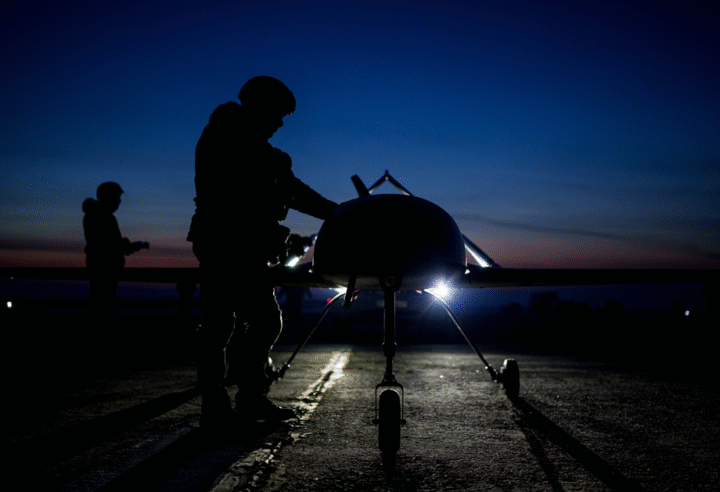
- Sub-threshold warfare would be a promising area for closer NB8-Ukraine intelligence sharing and response cooperation. Military officer exchanges would foster a shared strategic culture and help the NB8 gain first-hand experience of Ukraine’s uncrewed systems and drone warfare.
- Institutionally, the lowest-hanging fruit would be to upgrade Ukraine’s enhanced partnership with the Joint Expeditionary Force (JEF) to full membership. In the longer term, the NB8 (or JEF) countries and Ukraine should initiate the establishment of a European Defence Council, outside of EU and NATO structures, as a political forum for like-minded countries to coordinate defence and security cooperation in Europe, which would be open to other countries to join at a later stage.
Introduction: We are all in the same boat
Since Russia launched its full scale invasion, Ukraine has been a security provider rather than only an aid recipient. Four years of full-scale war has ushered in a new generation of warfare. Ukraine’s battlefield experience, combat innovation and growing defence industrial potential should be far more deeply integrated with Nordic-Baltic (NB8) partners through co production projects, bilateral security agreements and wider cooperation formats that strengthen the defence of European democracies against the persistent Russian threat.
The synergy for strategic alignment between Ukraine and the NB8 countries is remarkable. All are small or medium sized democracies. Five of the nine – Ukraine, the Baltic states and Finland – have faced Russian aggression in the past century, and therefore share a similar historical memory. Ukraine’s resistance has delayed, disrupted and degraded Russian military capabilities that would otherwise pose a direct danger to the Baltic Sea region, the High North and the wider Euro Atlantic space.
At the same time, Moscow’s war effort is being reinforced by a web of supporting states. Belarus serves as a border ally and China is extending its global reach. Together, these dynamics underscore the growing strategic interdependence between Ukraine and the NB8. The battleline now stretching from the Black Sea to the North Sea underscores the urgency of deeper political, economic and security coordination in response to a potentially approaching, even larger war.
Download the PDF to read the full text.
About the Authors